
Gloomy Sunday", otherwise called the "Hungarian Suicide Song", is a well known melody created by Hungarian piano player and arranger Rezső Seress and distributed in 1933.
The first verses were titled Vége a világnak (The world is consummation) and were about misery brought about by war, finishing in a calm petition about individuals' wrongdoings. Artist László Jávor composed his own particular verses to the melody, titled Szomorú vasárnap (Sad Sunday), in which the hero needs to submit suicide taking after his beau's death.[1] The last verses wound up ending up plainly more mainstream while the previous were basically overlooked. The tune was first recorded in Hungarian by Pál Kalmár in 1935.
"Bleak Sunday" was first recorded in English by Hal Kemp in 1936, with verses by Sam M. Lewis,[2] and was recorded that year by Paul Robeson, with verses by Desmond Carter. It turned out to be outstanding all through a significant part of the English-talking world after the arrival of a rendition by Billie Holiday in 1941. Lewis' verses alluded to suicide, and the record name portrayed it as the "Hungarian Suicide Song". There is a repeating urban legend which guarantees that many individuals have submitted suicide while tuning in to this song.[3]
Substance [show]
Composing and background[edit]
The tune was made by Rezső Seress while living in Paris, trying to end up plainly settled as a musician in late 1932.[4] The first melodic organization was a piano tune in C-minor, with the verses being sung over it.[5] Seress composed the tune at the season of the Great Depression and expanding rightist impact in the essayist's local Hungary, in spite of the fact that sources contrast with regards to the degree to whether his tune was propelled by individual despairing instead of worries about the fate of the world. The premise of Seress' verses is a rebuke to the treacheries of man, with a supplication to God to show leniency toward the cutting edge world and the general population who execute evil.[6] There are some suggestions[7] that the expressions of "Vége a világnak" were in actuality not composed until World War II itself and not copyrighted until 1946.
Seress at first experienced issues finding a distributer, essentially because of the strangely despairing nature of the tune. One potential distributer expressed:
"
It is not that the melody is tragic, there is a kind of awful convincing misery about it. I don't think it would benefit anybody in any way to hear a tune like that.[8]
"
The melody was distributed as sheet music in late 1933,[9] with verses by artist László Jávor, who was roused by a current separation with his fiancée.[4] According to most sources, Jávor revamped the verses after the tune's first production, in spite of the fact that he is in some cases portrayed as the first author of its words.[10] His verses contained no political conclusions, but instead were a regret for the passing of a dearest and a promise to meet with the significant other again in the afterlife.[8][11][12] This form of the tune turned into the best known, and most later rewritings are based around lost love.[13]
Urban legends[edit]
There have been a few urban legends in regards to the tune throughout the years, for the most part including it being supposedly associated with different quantities of suicides, and radio systems responding by purportedly restricting the song.[14] However, the majority of these cases are unsubstantiated.[15]
Squeeze reports in the 1930s related no less than nineteen suicides, both in Hungary and the United States, with "Desolate Sunday",[3][4][16] yet the vast majority of the passings evidently connected to it are hard to check. The urban legend seems, by all accounts, to be, generally, basically a frivolity of the high number of Hungarian suicides that happened in the decade when the melody was formed because of different variables, for example, starvation and neediness, and also the ascent of Nazi Germany's impact in Europe. No reviews have drawn an unmistakable connection between the melody and suicide.[15]
In January 1968, some thirty-five years in the wake of composing the tune, its writer committed suicide.[17]
The BBC prohibited Billie Holiday's variant of the tune from being communicate, as being impeding to wartime spirit, yet permitted exhibitions of instrumental versions.[3] However, there is little proof of some other radio bans; the BBC's boycott was lifted by 2002.[15]
Later recordings and remarkable performances[edit]
The melody's reputation contributed towards numerous other prominent specialists later recording the tune, including:
1935: Katalin Karády
1936: Paul Whiteman and Johnny Hauser
1936: Damia (in French as "Solemn dimanche")
1936: Noriko Awaya (in Japanese as "Kurai Nichiyōbi (暗い日曜日)")
1936: Hildegarde
1936: Agustín Magaldi (in Spanish as "Triste domingo")
1937: Pyotr Leshchenko (in Russian as "Мрачный воскресный день")
1940: Artie Shaw + Pauline Byrne
1941: Billie Holiday
1941: Mimi Thoma (in German as "Einsamer Sonntag")
1946: Luis Russell + Lee Richardson
1958: Mel Tormé
1959: Eila Pellinen (in Finnish as "Surullinen sunnuntai")
1961: Sarah Vaughan
1961: Lorez Alexandria
1962: Ketty Lester
1962: Lou Rawls
1967: Carmen McRae
1968: Genesis (the Los Angeles hallucinogenic shake band, not the UK dynamic shake band)
1969: Ray Charles
1969: Big Maybelle (on Saga of the Good Life and Hard Times)
1972: Viktor Klimenko (in Russian as "Ona pred ikonoi", Arseny Golenishchev-Kutuzov verses)
1975: Jimmy Witherspoon (on Spoonful)
1977: Etta Jones (on My Mother's Eyes)
1980: Lydia Lunch (on Queen of Siam collection)
1981: Elvis Costello (Trust) (Sam M. Lewis, Rezső Seress)
1982: Associates (Sulk) (Sam M. Lewis, Rezső Seress) (vocalist Billy Mackenzie conferred suicide in 1997)
1983: Marc Almond (Torment and Toreros) (Sam M. Lewis, Rezső Seress)
1984: Peter Wolf (Lights Out) (Sam M. Lewis, Rezső Seress)
1985: Harri Marstio (in Finnish, verses Reino Helismaa)
1986: Christian Death (Atrocities) (Sam M. Lewis, Rezső Seress)
1987: Dead Milkmen (as an extension in their tune "Blood Orgy of the Atomic Fern")
1987: Serge Gainsbourg (French adaptation)
1987: Abbey Lincoln
1987: Marianne Faithfull
1991: Vlado Kreslin (Bela nedelja (Namesto koga roža cveti collection)) (Vlado Kreslin verses)
1991: Hot Club de Norvège (The Best of Hot Club de Norvege with Ivar Brodahl On Violin)
1992: Diamanda Galás (The Singer) (Desmond Carter verses)
1992: Sinéad O'Connor
1994: Anton LaVey (Released it in his 10" "Peculiar Music")
1995: Satan's Cheerleaders
1995: Creed Taylor Orchestra
1996: Sarah McLachlan (utilizing Sam M. Lewis verses; from the Rarities, B-Sides, and Other Stuff collection)
1997: Tata Mirando jr and Nello Mirando (on the "Weile meer Sinti ham" http://www.sintimusic.nl/shop/different specialists weile-meer-sinti-ham/collection)
1998: Danny Michel (from the "Unmistakable" collection)
1999: The Smithereens (on God Save The Smithereens collection)
1999: Detlef Petersen (Orchestral form - soundtrack of "Ein Lied von Liebe und Tod" - Gloomy Sunday)
1999: Ben Becker (soundtrack of Ein Lied von Liebe und Tod - Gloomy Sunday – A Song of Love and Death)
1999: Erika Marozsán (soundtrack of Ein Lied von Liebe und Tod - Gloomy Sunday – A Song of Love and Death)
2000: Kronos Quartet (instrumental for string quartet)
2000: Ricky Nelson (Legacy collection)
2000: Sarah Brightman (utilizing Sam M. Lewis verses; on La Luna)
2001: Heather Nova (on the South collection)
2001: Iva Bittová
2001: NRG Ensemble (The Hal Russell Story)
2002: Hans Koller (Lovers and Strangers)
2003: Priscilla Chan
2004: Vlado Kreslin
2004: Branford Marsalis Quartet
2005: Venetian Snares (under Hungarian title "Öngyilkos vasárnap", truly signifying "Self-destructive Sunday", fusing an example of Billie Holiday's 1941 interpretation)
2005: Jaurim in the collection 靑春禮瓚 (청춘예찬, Ode to Youth)
2005: Karin Krog
2005: Herbie Mann (Herbie Mann String Album)
2006: Eminemmylou on the nation rap collection Muthabanjo
2006: Mickey Baker
2006: Peter Herbert
2006: Lucía Jiménez
2006: Greta Keller
2006: London Concertante
2006: Quadro Nuevo
2007: Lajos Dudas
2008: Page Cavanaugh
2009: Emilie Autumn (Billie Holiday verses - initial 2 verses as it were)
2009: Ryan "Possibility" Bascombe (Hip Hop Remix - with a Billie Holiday Sample)
2010: Leander Rising [18]
2010: Pallbearer (band) (demo)
2010: Björk (Alexander McQueen Commemorial)
2011: Marissa Nadler and Ryan Lee Crosby
2012: Sarasvatī (on Mirror collection)
2013: Dax Riggs (live performances[19])
2013: Diamant (made uniquely for Halloween 2013)[20]
2014: Angelina Jordan (Norwegian Talent Show)[21]
2014: Francesca Nicoli and Ataraxia (with Italian verses)
2015: Yudi Suryono (X Factor Indonesia)[22]
2015: Isyana Sarasvati (Indonesian Singer)[23]
2015: Epikurian (Remix-Noise Music Version)[24]
2015: Matt Forbes (Live at Capitol Studios)[25]
2016: Boston Chamber Orchestra (coordinated by Ivan Linn, from the film score of The Tenants Downstairs)[26]
Legacy[edit]
The melody is highlighted in a few scenes of Steven Spielberg's 1993 film Schindler's List.
The 1999 German-Hungarian film Ein Lied von Liebe und Tod recounts an anecdotal tale about the production of the melody, portraying an affection triangle amid World War II. Heather Nova covers the tune in the end credits.
The melody roused the 2006 motion picture The Kovak Box, in which an essayist is caught on the island of Mallorca with individuals who are infused with a microchip that makes them confer suicide when they listen "Melancholy Sunday".[27] The tune plays amid the film, sung by the performing artist Lucía Jiménez. A music video from the cover was discharged as a major aspect of the motion picture advancement. The tune likewise highlights on the soundtrack of Wristcutters: A Love Story, performed by Artie Shaw.[28]
In 2008, Belgian craftsman Marieke Van Wuytswinkel utilized a specimen of Gloomy Sunday in her work A Natural Morning.[29][30] The tune and urban legend showed up in the Taiwanese dramatization Gloomy Salad Days. On-screen character Serena Fang recorded a rendition of "Desolate Sunday" that was incorporated into the soundtrack discharged on 19 November 2010. Bleak Sunday was included in a 2012 TV scene of Dark Matters: Twisted But T


 Aditya Dahal is known as the "Google Boy" of Nepal. He was conceived in Chabhail, Kathmandu. Starting at 2015 he is 4 years of age. He has not taken any class in school but rather is said to have the capacity to write in Nepali, English, Korean, Chinese and various different dialects. He is additionally said to have the capacity to foresee what's to come. He can not talk and is said to give his answer by composing on paper. At first, he is said to have stunned his folks by composing the names of the considerable number of nations on the planet and the name of their pioneers. He is likewise said to recall the name and control of everybody he meets, which means of each words asked to him and even the importance of the words from various dialect. Albeit many are stunned, certifications researchers are not flabbergasted, many urge others to avoid such convictions.
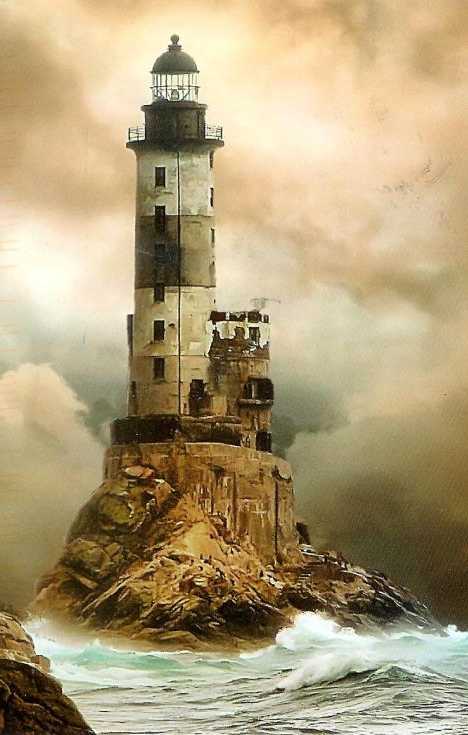 This beacon was worked under to a great degree troublesome conditions on what was at one time a rugged shake simply off the southeastern-most cape of Sakhalin island. The Mys Aniva beacon is more than seventy five percent of exceptionally old and has seen a considerable measure of history amid its life expectancy. Late 1930s when Sakhalin was partitioned amongst Japan and the USSR, the Japanese requested it worked as a major aspect of the treastie. After the Soviets grabbed the whole island of Sakhalin toward the finish of World War II. The Russians introduced a RTG (Radioisotope Thermoelectric Generator) to supply power to the light – yes, this was an atomic fueled beacon!


 Aokigahara (青木ヶ原?), otherwise called the Suicide Forest or Sea of Trees (樹海? Jukai), is a timberland on the northwestern flank of Japan's Mount Fuji flourishing with 30 square kilometers (12 square miles) of solidified magma set around the last significant ejection of Mount Fuji in 864 AD.[1] The western edge of Aokigahara, where there are a few hollows loaded with ice, is a well known goal for vacationers and school trips. Parts of Aokigahara are extremely thick, and the permeable magma ingests sound, furnishing guests with a feeling of solitude.[2]

